
Bonuses on GOGO Rummy are designed to enhance the overall gaming experience by providing additional value to players. Whether you are just starting or already active on the platform, bonus offers create more opportunities to explore gameplay and extend sessions.
These bonuses often include welcome rewards, referral incentives, and seasonal promotions that are activated under specific conditions. This variety ensures that players always have access to new incentives depending on their level of activity and engagement on the platform.
Unlike traditional promotions, modern bonus systems are structured to match user behavior and preferences. This allows players to engage with different formats while maintaining flexibility.
In addition, the bonus system is regularly updated to reflect ongoing platform events and user participation trends. This dynamic approach keeps rewards relevant and ensures that players continue to find value in returning to the platform over time.
What Is a Bonus on GOGO Rummy
A bonus is an additional reward given to players based on specific actions such as registration, deposits, or gameplay activity.
These rewards can include:
- extra balance
- free entries
- cashback
- promotional credits
Bonuses are integrated into the platform to support both new and returning users.
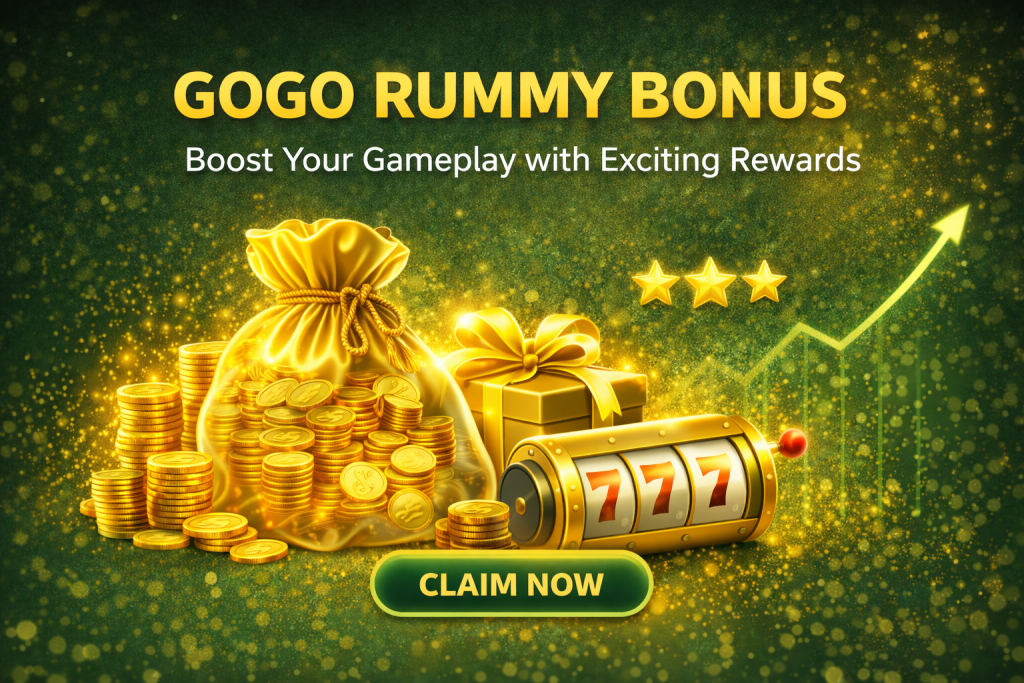
Key Types of Bonuses
GOGO Rummy offers a variety of bonus types that cater to different stages of the user journey.
Welcome Bonus
This is the first bonus players receive after Sign up. It is designed to introduce users to the platform and encourage initial activity.
Deposit Bonus
Players receive additional funds when making deposits. This increases available balance and allows more gameplay.
Cashback Bonus
This bonus returns a percentage of losses, helping players maintain balance during sessions.
Referral Bonus
Users can earn rewards by inviting others to join the platform.
Bonus Overview Table
Bonus Usage Graph
Why Bonuses Matter
Bonuses are not just promotional tools — they influence how players interact with the platform.
They help:
- extend gameplay
- reduce initial risk
- encourage exploration
This makes them an essential part of the ecosystem.
User Behavior and Bonuses
Players interact with bonuses in predictable ways.
They:
- use welcome offers first
- switch to deposit bonuses
- rely on cashback for balance
This creates a progression.
Platform Integration
Bonuses are integrated directly into the system.
Users can access them through:
- dashboard
- promotions section
- notifications
This ensures visibility.
Practical Perspective
From a practical standpoint, bonuses allow players to experience more without increasing their initial investment. They provide flexibility and create a more engaging environment.
Keyword Integration
After Login, players can access bonuses and use them across Games, including selected Slots and other features available through the App.
Popular Bonuses in India and How Players Use Them
Bonuses on GOGO Rummy follow patterns that are already familiar to players in India. The market has developed a clear structure of offers that users expect, understand, and actively use.
Instead of random promotions, most bonuses are designed around user behavior and regional preferences. This makes them easier to use and more effective.
Most Popular Bonuses for Indian Players
Indian players tend to prefer bonuses that provide immediate value and flexibility.
Here are the most common types:
Welcome Bonus
- given after registration
- helps new users start playing
- often includes extra balance or free entries
This is usually the first interaction with the bonus system.
First Deposit Bonus
- applied on initial deposit
- increases playable balance
- allows extended gameplay
This is one of the most used bonuses.
Daily Bonus
- available for regular players
- encourages daily activity
- provides small but consistent rewards
This supports long-term engagement.
Cashback Bonus
- returns a percentage of losses
- reduces risk
- keeps players active
This is especially popular during longer sessions.
Referral Bonus
- rewards users for inviting others
- builds community
- provides additional earnings
This bonus connects players.
Bonus Types Table
Welcome Bonus
Best for new players
Quick start boost
Easy access
Deposit Bonus
Extra balance
Higher play value
Flexible usage
Daily Bonus
Regular rewards
Encourages activity
Small but consistent
Cashback
Loss recovery
Risk reduction
Session support
Bonus Preference Graph
How Players Choose Bonuses
Players do not choose bonuses randomly. Their decisions are influenced by:
- current balance
- experience level
- session goals
For example:
- new players → welcome bonuses
- active players → daily rewards
- experienced players → cashback
This creates structured behavior.
Bonus Timing
Timing is important in bonus usage.
Players often:
- activate bonuses at the start of a session
- use deposit bonuses when balance is low
- rely on cashback after losses
This timing improves efficiency.
Combining Bonuses
Many players combine different bonuses.
Example strategy:
- start with welcome bonus
- add deposit bonus
- use cashback for support
This creates a layered approach.
Common Mistakes
Some players misuse bonuses.
Typical mistakes include:
- using bonuses without understanding conditions
- activating too many at once
- ignoring expiration time
Avoiding these improves results.
Adaptation Over Time
As players gain experience, they adjust how they use bonuses.
They:
- become more selective
- use bonuses strategically
- focus on value
This improves gameplay.
Bonus Impact on Gameplay
Bonuses influence how players interact with the platform.
They:
- extend sessions
- reduce risk
- increase engagement
This makes them essential.
Practical Perspective
From a practical point of view, bonuses are tools that help players manage their sessions. Those who understand how different types work and when to use them tend to get more value and maintain a better balance during gameplay.
Bonus Lifecycle in Real Gameplay
A typical bonus follows a lifecycle that reflects how players use it over time.
This lifecycle includes:
- activation
- initial usage
- active gameplay
- adjustment
- completion or expiration
Each stage represents a different type of interaction.
Bonus Usage Timeline Table
Player selects and activates a bonus
Bonus is applied in initial gameplay
Bonus is fully integrated into the session
Player changes strategy based on results
Bonus is used полностью or expires
Real Player Behavior with Bonuses
As sessions progress, player behavior changes.
At the beginning:
- bonuses are used actively
- players explore options
- risk is moderate
In the middle:
- bonuses support gameplay
- players adjust strategy
- balance is managed
Towards the end:
- bonus value decreases
- players focus on remaining balance
- decisions become more controlled
This progression reflects real usage.
Short-Term vs Long-Term Bonus Use
Players think about bonuses on two levels.
Short-term:
- immediate benefit
- quick gameplay boost
Long-term:
- session extension
- balance control
- risk management
Balancing both approaches improves results.
Bonus and Session Rhythm
Bonuses influence the rhythm of gameplay.
Without bonuses:
- sessions are shorter
- risk is higher
With bonuses:
- sessions last longer
- gameplay becomes smoother
This creates a different experience.
Strategic Timing
Timing plays a key role in bonus usage.
Players often:
- activate bonuses at the start
- use them during active gameplay
- avoid wasting them at low engagement moments
This increases effectiveness.
Interaction Between Bonuses and Decisions
Bonuses do not replace decision-making — they enhance it.
The interaction works like this:
- bonus increases available resources
- player makes decisions
- results influence further actions
This creates a feedback loop.
Stability vs Aggression
Bonuses allow players to choose between different play styles.
Stable approach:
- consistent use of bonuses
- controlled risk
Aggressive approach:
- higher-risk gameplay
- faster bonus consumption
Both approaches depend on player preference.
Adaptation Over Time
Experienced players use bonuses differently.
They:
- understand value better
- choose the right timing
- avoid unnecessary risk
This improves efficiency.
Common End-of-Session Behavior
Towards the end of a session, players:
- evaluate remaining bonus value
- decide whether to continue
- adjust strategy
This defines how the session ends.
In real usage, bonuses become part of the player’s routine. Instead of being seen as separate rewards, they integrate into the overall gameplay strategy and influence how sessions develop over time.
Bonuses on GOGO Rummy are not just additions to gameplay — they are extensions of it. They change how players approach each session, how long they stay engaged, and how they manage their decisions.
At a deeper level, bonuses stop being about extra value and start becoming part of the system itself. When used правильно, they don’t just increase opportunities — they reshape the entire experience, turning each session into a more balanced and controlled interaction rather than a sequence of isolated actions.
Bonus Integration and Long-Term Reward Engagement
GOGO Rummy Bonus features are designed to function as part of a broader engagement ecosystem where rewards support player activity, session continuity, and long-term platform interaction. Rather than existing as isolated incentives, welcome bonuses, deposit offers, cashback rewards, referral programs, and promotional campaigns are integrated into the overall user journey to encourage consistent participation and balanced gameplay. As players become more familiar with the platform, bonus usage often becomes more strategic, with rewards being selected based on session goals, activity patterns, and preferred gameplay styles. This structured approach helps create a more personalized and sustainable reward experience where bonuses contribute to ongoing engagement while remaining connected to the core gameplay environment.